
Coordinating Autonomous Research Agents Through Structured Output Schemas
In today’s software development, getting one AI agent to summarize a web page is close to trivial. Coordinating a whole swarm of autonomous research agents that scrape, analyze, cross-check, and assemble very large datasets with no human in the loop is another matter entirely, and a hard engineering problem.
Once AI moves beyond isolated prompts into multi-agent workflows, the weak spot is usually not how smart the model is but how data passes from one agent to the next. Imagine Agent A collects financial data that Agent B then needs for a risk review. A single chatty hallucination, such as prefixing the payload with “Here is the data you requested:”, is enough to break the JSON parser on the spot and bring the whole pipeline down.
Engineers who want deterministic, production-grade autonomous research systems need to stop parsing strings and adopt Structured Output Schemas. Enforcing firm data contracts through JSON schemas and validation libraries such as Pydantic turns erratic LLM output into predictable, type-safe software components.
Why Unstructured Data Causes Trouble in Multi-Agent Workflows
A typical research pipeline may include a “Planner Agent” that splits a user’s question into sub-tasks, a “Scraper Agent” that browses the web, and a “Synthesizer Agent” that produces the finished report.
If those agents talk to each other in ordinary conversational text, you are counting on the LLM to behave and format its output properly. In the past, developers leaned on elaborate Regular Expressions (Regex) to pull data out of LLM responses, for example attempting to extract a dictionary from a block of text with re.search(r'\{.*\}', text).
That technique is brittle at its core, because language models are probabilistic. A different temperature setting, small updates to the base model’s weights, or an elaborate prompt can all make the output format wander. One missing comma, a quotation mark that was not escaped, or a stray markdown block (```json) can cause unrecoverable validation errors further down the line. When a workflow coordinates hundreds of API calls each minute, a formatting failure rate of just 1% makes the system unfit for enterprise use.
Structured Output Schemas: A Shared Data Contract
Structured output schemas address the issue by requiring the language model to conform to a fixed, predefined data structure before it produces a response. The orchestration framework does not merely request JSON formatting from the model; it supplies a strict schema, frequently based on the JSON Schema specification, and the model’s token generation is algorithmically restricted to follow it.
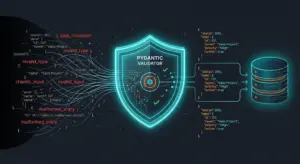
With current APIs, whether that is the response_format option from OpenAI or the tool-use capabilities from Anthropic, the schema serves as a data contract. Say a research agent must find a given company’s competitors. The schema states explicitly that the result has to be an array of objects, each holding a company_name (string), a market_share (float), and key_products (list of strings).
Should the model try to emit a string in a field that expects a float, the API refuses that generation, or the orchestration layer detects it and kicks off a retry automatically. Type safety is thereby ensured across the full agent swarm.
An Architecture for a Structured Research Swarm
To see how this works in production, let us walk through the architecture of a multi-agent research orchestration system built around strict structure.
1. The Supervisor (Planner) Agent
Everything starts with the Supervisor Agent. Suppose a user wants an in-depth report on “Solid State Battery Market Trends.” Rather than doing that research on its own, the Supervisor produces a structured execution plan.
Its output schema insists on a list of tasks, and every task has to carry an agent_role, a search_query, and a required_data_points array. Since that output is cleanly structured, the Python backend can simply loop over the list and launch parallel asynchronous workers, one per task.
2. The Worker (Scraper/Analyzer) Agents
After tasks are handed out, the Worker Agents run the queries they were given. Picture a worker reading an industry whitepaper. It does not send back a huge block of summary text; it is constrained by an ExtractionSchema.
Under that schema, the worker must return:
primary_finding(String, 200 characters at most)statistical_evidence(Array of Floats)source_url(String that has to be a valid URI)confidence_score(Integer from 1 to 10)
Because the data lands in exactly this shape, it can go straight into a database, an index, or a calculation, with no manual review or text cleanup needed.
3. The Aggregator (Synthesizer) Agent
With every Worker Agent returning predictable, well-formed JSON objects, the Aggregator Agent has a far simpler job. The orchestration script joins the validated JSON payloads together and hands them to the Aggregator.
The Aggregator’s own output schema can prescribe the precise layout of the finished article: a title, an executive_summary, an array of h2_sections (each with a subheading and content), and an array of citations. As a result, the final output fits your publishing CMS requirements on every run.
Using Pydantic for Strict Data Validation
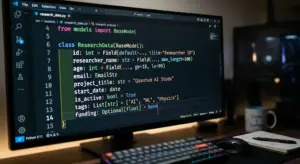
Within the Python ecosystem, Pydantic is now the de facto standard for declaring these schemas in AI workflows. LangChain, LlamaIndex, and similar frameworks let you hand Pydantic models directly to the LLM out of the box.
With Pydantic, engineers describe data models through ordinary Python type hints. It goes further than basic type checking and supports elaborate validation rules. You might, for example, write a validator confirming that a generated url really begins with https://, or that a market_valuation string has no currency symbols, which pushes the LLM to emit plain integers. The moment a payload comes back from a Worker Agent, the orchestration layer runs the raw JSON through the Pydantic model.
Creating Self-Healing Agent Loops
Sooner or later the LLM will fail to match the schema. What then? That is the job of self-healing loops. When Pydantic raises a ValidationError, for instance because the model produced a string where an array belonged, the orchestration script catches the exception.
Rather than failing, the script sends a fresh prompt back to the agent responsible. That retry prompt contains the original faulty output plus the exact Python stack trace from the ValidationError, and tells the agent: “Your previous output did not pass validation because of the error below. Fix the JSON structure and try once more.”
A deterministic feedback loop like this greatly improves the reliability of autonomous systems, letting them smoothly recover from their own formatting hallucinations.
Cost and Latency Considerations
Structured output schemas offer reliability that is hard to match, but they bring architectural trade-offs. Strict schemas often mean the LLM must read extra system prompt tokens that spell out the schema’s constraints. On top of that, a system that leans on self-healing loops will make additional API calls whenever validation fails, raising both latency and token spend.
To keep this in check, engineers should assign narrow, highly structured tasks such as data extraction to models that are smaller, quicker, and cheaper (Claude 3.5 Haiku or GPT-4o-mini, for example), and reserve the costly frontier models for the Planner and Synthesizer roles, where serious reasoning is actually needed.
Conclusion
Dependable multi-agent systems owe less to squeezing more reasoning out of the AI and more to sound data engineering. An autonomous research agent can never be more reliable than the data contracts it operates under. Coordinating the swarm through Pydantic validation and JSON Schema removes the guesswork of parsing natural language. Messy AI hallucinations give way to predictable, sturdy, and very scalable data pipelines, which opens the door to genuinely autonomous research systems for the enterprise.
Frequently Asked Questions
1. What is meant by a structured output schema in AI?
It is a predefined blueprint, typically written in JSON, that makes a Large Language Model shape its answer precisely as specified. It ensures the AI hands back data types such as arrays, booleans, and floats rather than paragraphs of unpredictable prose.
2. Why not simply parse AI responses with Regex?
Regular Expressions are extremely rigid. LLMs are probabilistic, so they may tack on conversational filler, swap quotation marks, or shift spacing a little. Small variations like these break Regex parsers immediately and cause multi-agent workflows to fail.
3. In what way does Pydantic help coordinate AI agents?
Pydantic is a Python library for validating data, and it lets developers spell out exact data structures. When an AI agent sends data that does not fit the Pydantic model, such as text where a number was expected, Pydantic flags the error so the system can automatically ask the AI to correct it.
4. What does a self-healing AI loop mean?
It describes the case where an agent’s output fails a validation check and the system sends the error log straight back to the AI. The AI reads that error, fixes its own formatting slip, and submits the data again, all without a human stepping in.
5. Will structured outputs raise my API costs?
Costs can rise a little, since the schema definition adds tokens to the system prompt. And when the AI misses the schema and needs an automatic retry, you pay for one more API call. Even so, broken data pipelines generally cost far more than these small token expenses.
References & Sources
- OpenAI API Documentation: “Structured Outputs”, guidance on enforcing JSON schema compliance directly inside the completion API.
- Pydantic Documentation: Using Python type hints to validate data and manage settings.
- LangChain Core Concepts: How output parsers and Pydantic fit into workflows with multiple agents.
- Anthropic Documentation: Extracting data deterministically with function calling and tool use.