Runtime Guardrail Architecture to Protect Production LLMs from Prompt Manipulation
How to build a layered runtime guardrail layer that screens LLM inputs and outputs, isolates untrusted context and keeps latency low in production.
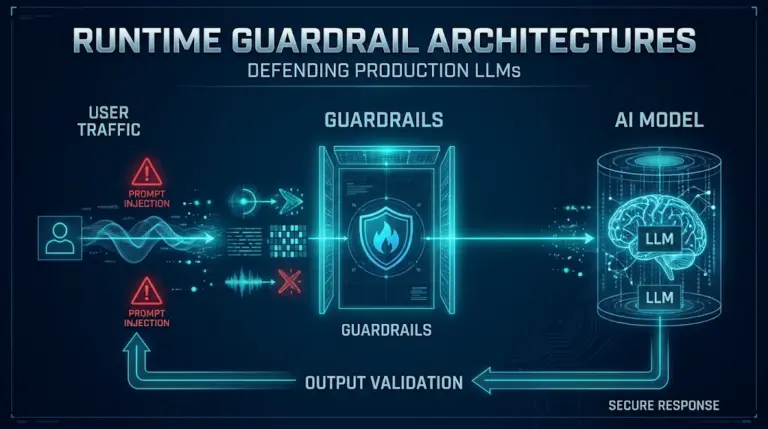
How to build a layered runtime guardrail layer that screens LLM inputs and outputs, isolates untrusted context and keeps latency low in production.

Why huge LLM context windows raise cost, latency and recall problems, and how truncation, summarization, compression and re-ranking keep prompts lean.

How hybrid search pairs dense vector retrieval with BM25 keyword matching, and how rank fusion merges both result lists for accurate RAG pipelines.
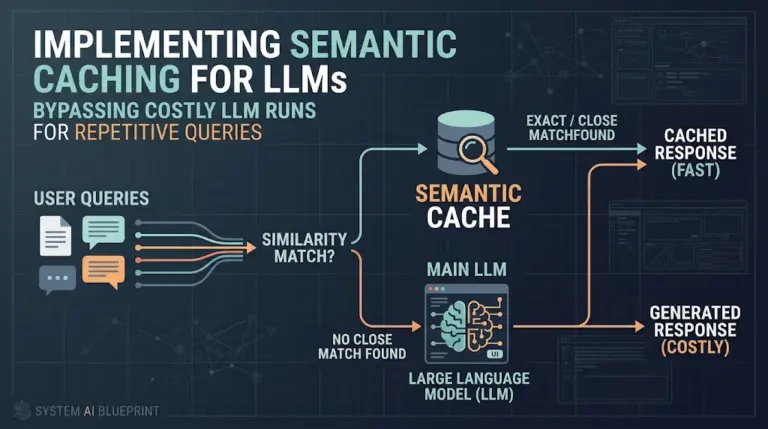
A practical look at semantic caching for LLM apps: embedding models, in-memory vector stores, similarity thresholds, eviction, multi-turn context and PII rules.
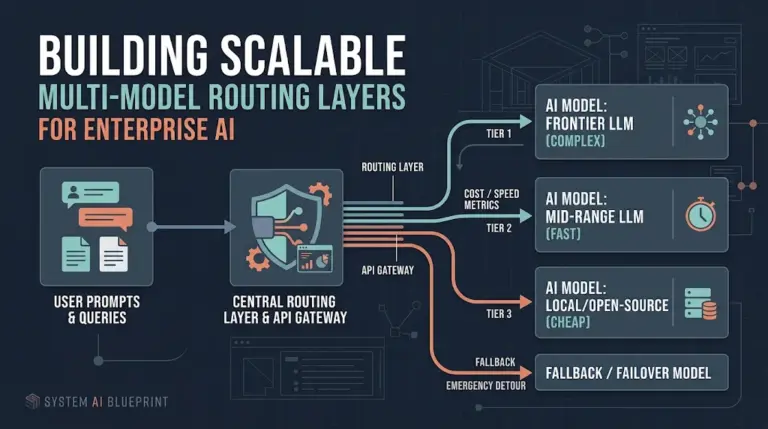
How a multi-model routing layer sends each request to the right LLM by complexity, cost and latency, with circuit breakers, fallbacks and PII redaction.
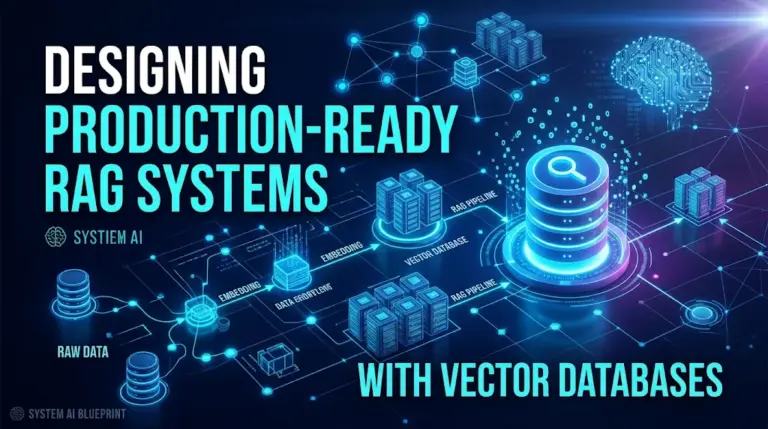
A practical design guide to production RAG: ingestion, chunking, embeddings, vector database choice, hybrid retrieval, re-ranking and pipeline evaluation.

Lessons from running an enterprise LLM gateway: token-based rate limits, circuit-breaker failover between providers, tenant isolation and PII redaction.

Why AI monoliths struggle in production and how to split gateway, orchestration, retrieval, tool workers and inference into separately scaled microservices.